
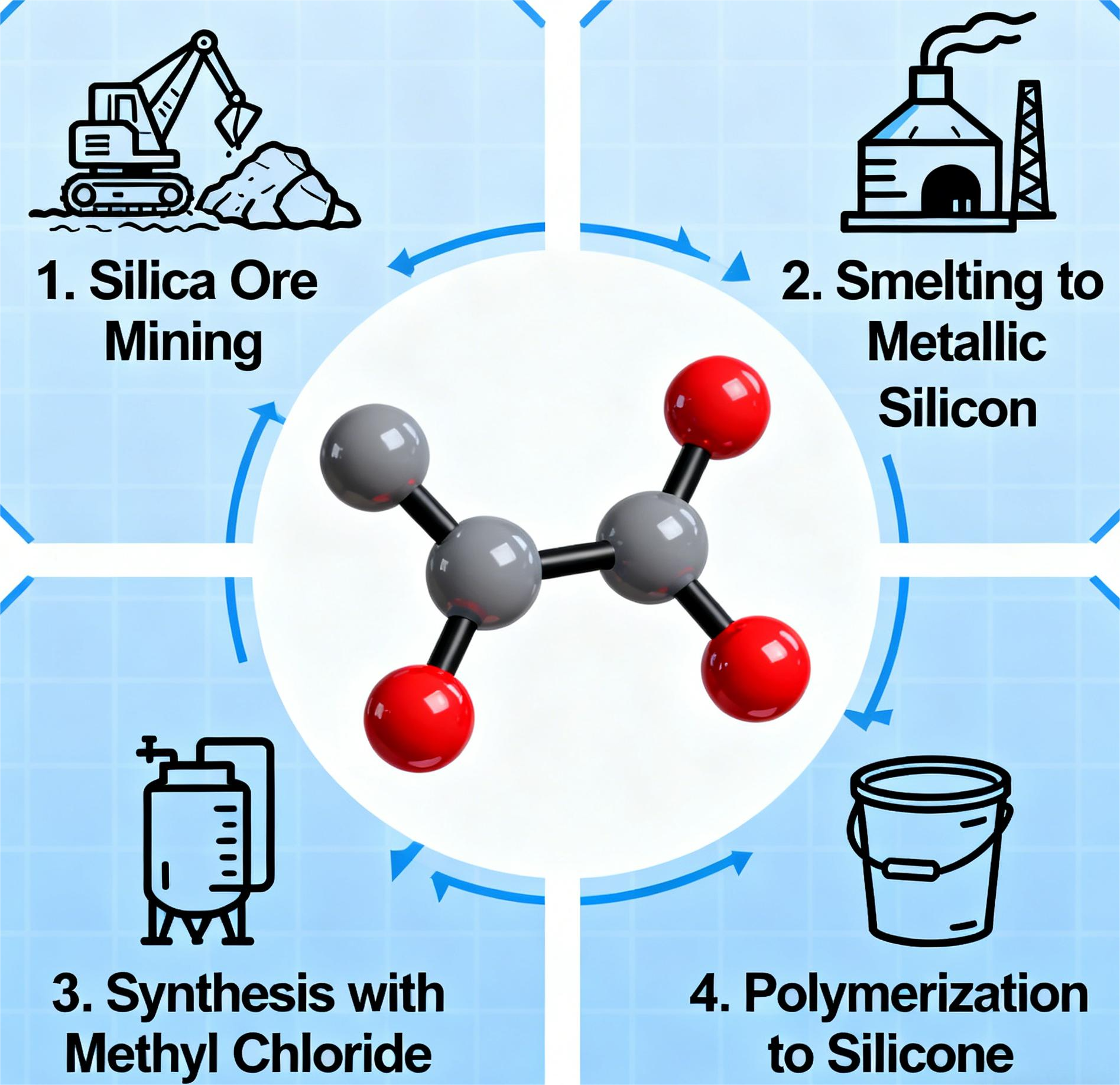
Сілікон — гэта ўніверсальны сінтэтычны матэрыял, які выкарыстоўваецца ў незлічоных галінах прамысловасці: ад аўтамабільнай прамысловасці і медыцынскіх вырабаў да сродкаў асабістай гігіены і будаўніцтва. Яго ўнікальныя ўласцівасці, у тым ліку ўстойлівасць да цяпла, гнуткасць і хімічная стабільнасць, робяць яго незаменным у сучаснай вытворчасці. Але ці задумваліся вы калі-небудзь, Як вырабляецца сілікон крок за крокам? У гэтым вычарпальным кіраўніцтве мы разбяром увесь працэс вытворчасці сілікону, падрабязна апішам ключавыя машыны, якія ў ім выкарыстоўваюцца, і тое, як імі карыстацца (як Тыпы сіліконавых прэсаў для ліцця пад ціскам і кіраўніцтва па выкарыстанні), адказваць на распаўсюджаныя пытанні і дзяліцца ведамі, адаптаванымі для прафесіяналаў галіны. Незалежна ад таго, з'яўляецеся вы вытворцам, пакупніком ці проста цікаўным энтузіястам, гэты дапаможнік растлумачыцьМетады вытворчасці сілікону для прамысловага выкарыстання, у тым ліку парады па Як выбраць сыравіну для вытворчасці сіліконавага гумоў і Парады па кантролі часу застывання і тэмпературы сілікону.
Асноўная сыравіна для вытворчасці сілікону
-
Крэмній (выдзелены з крэмнезёму)
-
Хларавы газ (для вытворчасці сілікону тэтрахларыду)
-
Вада (для рэакцый гідролізу)
-
Вінілавы сіліконавы алей (асноўная сыравіна для вытворчасці сіліконавага гумкі)
-
Каталізатары (напрыклад, плаціна для дадатковага зацвярдзення)
-
Умацоўваючыя напаўняльнікі (напрыклад, дыстыляваны крэмнезем для павышэння трываласці)
Працэс вытворчасці сілікону крок за крокам: ад сыравіны да гатовай прадукцыі
Крок 1: Выпрацоўка крэмнію метадам з высакаакіслага пяску
Ключавыя машыны і іх выкарыстанне
-
Электрадугавая печ:
-
Што гэта: выкарыстоўвае інтэнсіўнае электрычнае нагрэўванне (1800–2000 °C) для пераўтварэння кварцавага пяску ў крэмній. Сумесь кварцавага пяску і вугляроду (какс або вугаль) падаецца ў печ, дзе вуглярод рэагуе з кіслародам у кварцы, утвараючы дыяксід вугляроду, а ў выніку атрымліваецца чысты крэмній.
-
Як выкарыстоўваць: Загрузіце сумесь крэмнію і вугляроду ў графітавыя электроды печы. Прапусціце электрычны ток для стварэння неабходнай тэмпературы. Рэакцыя доўжыцца 6–8 гадзін, пасля чаго растоплены крэмній зліваецца з печы. Дайце крэмнію астыць і зацвярдзець у зліткі.
-
Крок 2: Вытворчасць хларасіланов (тэтрахларысiлу)
Ключавыя машыны і іх выкарыстанне
-
Рэактар з рухомым слоем:
-
Прынцып дзеяння: Забяспечвае рэакцыю паміж крэмніевым металам і хлорам для атрымання хласіланаў. Крэмніевы метал у выглядзе парашку падаецца ў струмені газу, а затым уводзіцца хлор, ствараючы аднароднае рэакцыйнае асяроддзе.
-
Спосаб прымянення: Сыліконавыя зліткі здрабніце да стану дробнага парашку і загрузіце ў рэактар. Нагрэйце рэактар да 250–300°C. Увядзіце хлорны газ у расплаўленую масу. У выніку рэакцыі ўтвараецца пара тетрахларыду крэмнію, якая астуджаецца і кандысуецца ў вадкасць для збору.
-
-
Кандыенсерная сістэмаАхалоджвае парах хларасілану да вадкага стану для захоўвання і далейшай апрацоўкі. Пераканайцеся, што тэмпература кандэнсатара ўсталявана ў дыяпазоне ад -20°C да -30°C для эфектыўнага кандэнсавання.
Крок 3: Гідроліз хларасіланаў з утварэннем монамераў сілоксану
Ключавыя машыны і іх выкарыстанне
-
Гідролізны рэактар:
-
Што гэта робіць: змешвае хларасіланы з вадой у кантраляваным асяроддзі для запуску гідролізу. У выніку рэакцыі ўтвараюцца сілоксанавыя манамеры (напрыклад, пры гідролізе дыметылдыхларасілану ўтвараецца дыметылсілоксан) і хлорыстая кіслата (HCl).
-
Спосаб прымянення: Дадайце вадкія хларасіланы і ваду ў рэактар у суадносінах 1:2. Падтрымлівайце тэмпературу 20–40°C, каб прадухіліць празмернае выдзяленне параў HCl. Непрерыўна змешвайце сумесь на працягу 1–2 гадзін для забеспячэння поўнага праходжання рэакцыі. Аддзяліце слой монамера сілоксану ад аквазнойнага слоя HCl з дапамогай сепаратара.
-
-
Ачышчальнік HCl: Removes and neutralizes hydrochloric acid byproducts to comply with environmental regulations. Pass the HCl vapor through a sodium hydroxide (NaOH) solution to form salt and water.
Step 4: Polymerization of Siloxane Monomers
Ключавыя машыны і іх выкарыстанне
-
Polymerization Reactor:
-
What it does: Uses heat and catalysts to initiate polymerization, where siloxane monomers form long, cross-linkable polymer chains. Common catalysts include potassium hydroxide (KOH) for condensation polymerization or platinum for addition polymerization.
-
How to use it: Load siloxane monomers and the appropriate catalyst into the reactor. Heat the mixture to 100–150°C for condensation polymerization or 80–120°C for addition polymerization. Maintain constant stirring for 4–6 hours to ensure uniform chain growth. Add chain terminators (e.g., trimethylchlorosilane) to control polymer length and properties.
-
-
Vacuum System: Removes unreacted monomers and volatile byproducts from the polymer mixture. Operate the vacuum at 0.1–1 mbar during the final stage of polymerization to improve polymer purity.
Step 5: Compounding (Adding Fillers & Additives)
Ключавыя машыны і іх выкарыстанне
-
Internal Mixer (Banbury Mixer):
-
What it does: Mixes the polymer with reinforcing fillers (e.g., fumed silica), plasticizers, antioxidants, and colorants to create a uniform silicone compound. The mixer uses rotating blades to apply shear force, ensuring thorough dispersion of additives.
-
How to use it: Load the base polymer into the mixer. Heat the chamber to 80–100°C to soften the polymer. Gradually add fillers and additives while the blades rotate at 50–100 RPM. Mix for 20–30 minutes, then discharge the compound onto a mill for further processing.
-
-
Two-Roll Mill: Refines the compounded silicone to remove air bubbles and ensure uniform consistency. Pass the compound between two rotating rolls (temperature: 60–80°C) for 5–10 minutes, adjusting roll spacing to achieve the desired thickness.
Step 6: Shaping (Molding/Extrusion) the Silicone Compound
Key Machines & Usage: Injection Molding, Extrusion & Thermoforming
-
Silicone Injection Molding Machine (for LSR and HCR):
-
What it does: Injects molten silicone into a preheated mold to create precise, complex shapes (e.g., medical catheters, automotive seals). Common types include plunger, auger, direct drive, and all-electric models—learn more in our Тыпы сіліконавых прэсаў для ліцця пад ціскам і кіраўніцтва па выкарыстанні.
-
How to use it:
-
For Liquid Silicone Rubber (LSR): Load two LSR components (catalyst and crosslinker) into the dosing unit. Mix them in a static/dynamic mixer, then inject into a mold preheated to 180–220°C. Apply pressure (100–200 bar) to fill the mold, then cure for 1–5 minutes .
-
For High Consistency Rubber (HCR): Feed preformed HCR strips into the screw extruder. Heat and mix the compound, then inject into a heated mold (160–180°C) under 150–250 bar pressure. Cure for 5–15 minutes .
-
-
-
Silicone Extruder Machine:
-
What it does: Produces continuous silicone products (e.g., hoses, gaskets, profiles) by forcing the compound through a die of the desired shape.
-
How to use it: Feed the compounded silicone into the extruder’s hopper. The screw conveys and heats the silicone (80–120°C) to a pliable state. Force the silicone through the die at 50–100 bar pressure. Cool the extruded product with water to set its shape, then cut to length.
-
-
Silicone Thermoforming Machine:
-
What it does: Heats silicone sheets until pliable, then forms them over a mold using vacuum or pressure (ideal for packaging, automotive components) .
-
How to use it: Load a silicone sheet into the machine. Heat the sheet to 120–160°C until flexible. Lower the mold and apply vacuum (to draw the sheet over the mold) or pressure (for detailed shapes). Cool the formed product, then trim excess material.
-
Step 7: Curing (Vulcanization)
Key Machines & Usage
-
Hot Air Oven:
-
What it does: Uses dry heat to cure silicone products. Ideal for small to medium batches (e.g., seals, gaskets).
-
How to use it: Place the shaped silicone products on racks in the oven. Set the temperature to 150–200°C and cure for 10–30 minutes (depending on product thickness). Ensure proper air circulation for uniform curing.
-
-
Continuous Vulcanization Line (CV Line):
-
What it does: Cures continuous silicone products (e.g., extruded hoses) efficiently in high-volume production.
-
How to use it: Feed the extruded silicone through a heated chamber (180–220°C) at a constant speed (1–5 m/min). The product cures as it moves through the chamber, then cools before winding or cutting.
-
Step 8: Finishing & Quality Control Methods for Silicone Manufacturing
Ключавыя машыны і іх выкарыстанне
-
Trimming Machine: Cuts excess material from molded/extruded products (e.g., flash from injection molding). Use a laser trimmer for precision or a mechanical trimmer for high-volume production.
-
Quality Control Equipment:
-
Hardness Tester: Measures Shore hardness (e.g., Shore A for flexible silicone) to ensure product consistency.
-
Tensile Tester: Evaluates tensile strength and elongation properties.
-
Visual Inspection Station: Checks for surface defects (bubbles, cracks) using magnifying lenses or automated cameras.
-
 English
  Chinese
  Japanese
  Spanish
  French
  Arabic
  Russian
  Portuguese
  Belarusian