
Silicone has become one of the most widely used materials in modern consumer products. From everyday accessories to branded gifts and IP derivatives, silicone stands out for its durability, flexibility, and safety.
But why is silicone so ideal for consumer products, especially compared to plastic or rubber?
In this article, we’ll explain the key properties of silicone, how it performs in daily-use products, and why manufacturers and brands increasingly choose silicone for custom consumer goods.
What Makes Silicone Different From Other Materials?
Silicone is not plastic.
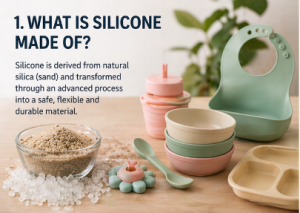
It is a synthetic polymer made from silicon, oxygen, carbon, and hydrogen, which gives it a unique combination of properties that traditional materials struggle to match.
Unlike plastic, silicone:
- Remains stable across a wide temperature range
- Does not easily crack or harden over time
- Maintains flexibility without losing strength
These characteristics make silicone especially suitable for products designed for repeated daily use.
Durability for Everyday Consumer Products
Consumer products are handled, dropped, squeezed, and exposed to different environments every day. Silicone performs exceptionally well under these conditions.
Key durability advantages include:
- High tear resistance
- Long lifespan without deformation
- Resistance to aging, moisture, and UV exposure
This is why silicone is commonly used in products like keychain charms, luggage tags, protective cases, and electronic accessories.
Heat Resistance and Material Stability
One major reason silicone is favored in consumer products is its temperature stability.
Silicone does not melt like plastic under normal conditions and remains stable across a wide temperature range. This makes it safe for products that may be exposed to heat during transport, storage, or daily use.
If you want a deeper explanation of how silicone behaves under heat, our guide on silicone material and heat safety explains temperature limits and usage in detail.
Safety for Daily Contact and Handling
Safety is critical for consumer products, especially those handled frequently or used by children.
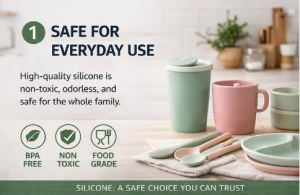
High-quality, food-grade or skin-safe silicone offers:
- Non-toxic composition
- No strong odors
- Smooth, skin-friendly surface
These properties make silicone suitable for products such as cosmetic mirrors, cup sleeves, coasters, snap bracelets, and other items that come into close contact with users.
Flexibility in Design and Customization
Silicone offers exceptional freedom in product design.
Manufacturers can easily customize:
- Shapes and thickness
- Colors and finishes
- Surface textures and details
This flexibility is especially valuable for IP derivatives and cartoon-themed products, where precise character details and vibrant colors are essential.
As a result, silicone is widely used for figurines, blind boxes, keychain charms, decorative accessories, and other character-based consumer goods.
Ideal for Branded and Promotional Products
Silicone is an excellent material for branded consumer products because it balances durability with cost efficiency.
For promotional and gift items, silicone offers:
- Consistent quality in mass production
- Easy logo integration
- Long-term brand exposure due to product longevity
This is why silicone is commonly used for refrigerator magnets, bottle openers, USB flash drives, and custom promotional items.
Silicone vs Plastic in Consumer Products
Compared to plastic, silicone offers several advantages:
- Better heat resistance
- Greater flexibility without cracking
- Longer usable life
- More premium tactile feel
While plastic may be cheaper initially, silicone often delivers better value over time for consumer-focused products.
Why Manufacturers Choose Silicone for Consumer Goods
From a manufacturing perspective, silicone allows:
- High consistency in molding
- Scalable production from small batches to mass volume
- Compatibility with custom molds and complex designs
These benefits make silicone a preferred choice for factories producing a wide range of consumer products, from simple accessories to complex IP derivatives.
Final Thoughts
Silicone is ideal for consumer products because it combines durability, safety, heat resistance, and design flexibility in one material.
For brands, IP owners, and businesses developing consumer goods, silicone offers a reliable and versatile solution that supports both creativity and long-term performance.
As demand for high-quality, customizable consumer products continues to grow, silicone remains one of the most trusted materials in modern manufacturing.
Q1: Is silicone safe for everyday consumer products?
Yes. High-quality silicone is non-toxic, odorless, and safe for daily contact.
It remains stable under normal temperature conditions and does not release harmful substances during regular use.
Q2: Can silicone consumer products be exposed to heat?
Silicone performs well across a wide temperature range and does not melt like plastic under normal conditions.
This makes it suitable for consumer products that may experience heat during transport, storage, or daily use.
Q3: Why is silicone better than plastic for consumer products?
Compared to plastic, silicone offers better flexibility, durability, and heat resistance over time.
It is less likely to crack, harden, or degrade with repeated use.
Q4: Is silicone suitable for custom and branded consumer products?
Yes. Silicone allows a high degree of customization in shape, color, and surface detailing, making it ideal for branded products and IP collaborations.
Q5: What types of consumer products are commonly made from silicone?
Silicone is widely used in items such as keychain charms, electronic device protectors, cup sleeves, luggage tags, refrigerator magnets, and other daily-use accessories.
 English
  Chinese
  Japanese
  Spanish
  French
  Arabic
  Russian
  Portuguese
  Belarusian
[…] Learn more about customization advantages in why silicone is ideal for consumer products. […]
[…] If you want to understand how silicone supports detailed designs, see why silicone is ideal for consumer products. […]
[…] Silicone allows high detail reproduction, durability, and customization.Learn more in why silicone is ideal for consumer products. […]
[…] This is why silicone is widely used not only for figurines but also for a wide range of everyday consumer products. Learn more in why silicone is ideal for consumer products. […]
[…] If you’re evaluating silicone applications in real products, you might also find this helpful:👉 Why silicone is ideal for consumer products […]
[…] 👉 Learn more:👉 Why silicone is ideal for consumer products […]